
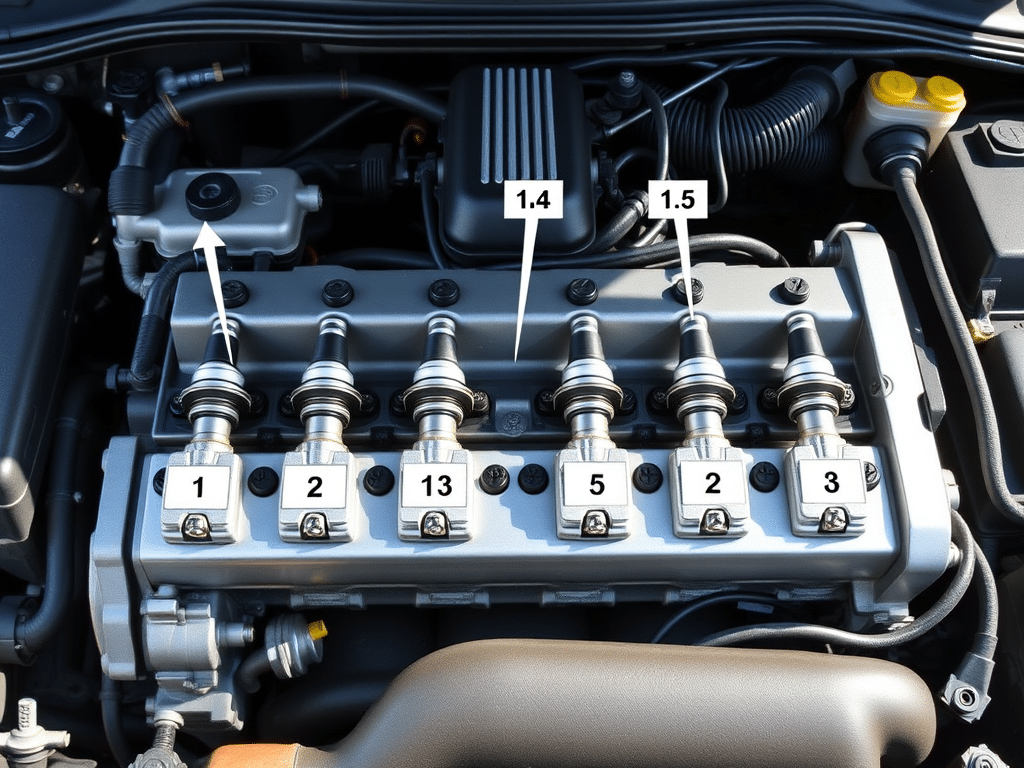
The firing order for your 2002 Ford Ranger with a 3.0L V6 engine is 1-4-2-5-3-6. This specific sequence is crucial for peak engine performance, minimizing misfires, and ensuring efficient combustion. Odd-numbered cylinders (1, 3, 5) are on the driver’s side, while even-numbered cylinders (2, 4, 6) sit on the passenger side.
When you maintain this firing order, you’ll enhance power delivery and fuel efficiency. Pay attention to wear on spark plugs and wires to prevent misfires. There’s a lot more to know about maintaining your engine’s health and performance, so stay tuned for further insights.
Key Takeaways
- The firing order for the 2002 Ford Ranger 3.0L V6 engine is 1-4-2-5-3-6.
- Odd-numbered cylinders (1, 3, 5) are on the driver’s side, while even-numbered cylinders (2, 4, 6) are on the passenger side.
- Maintaining the correct firing order is critical to prevent misfires and ensure smooth engine operation.
- Regular inspection of spark plugs and ignition wires helps maintain optimal firing order and engine performance.
- Adhering to the specified firing order enhances fuel efficiency and reduces engine wear.
Overview of Firing Order
Have you ever wondered how the firing order impacts your Ford Ranger’s engine performance? The firing order defines the sequence in which each cylinder ignites, directly influencing engine efficiency, smoothness, and power output.
In a 3.0L Ford Ranger, the firing order is essential for maximizing combustion and maintaining balance within the engine.
Firing sequence analysis involves examining this order to guarantee that ignition timing aligns with the engine’s design. Proper ignition timing guarantees that each cylinder fires at the best moment, maximizing power and minimizing engine vibration.
If the firing order is incorrect, it can lead to misfires, uneven power delivery, and increased wear on engine components.
Understanding the firing order helps you troubleshoot performance issues and make informed decisions regarding maintenance and modifications.
For instance, if you’re experiencing engine knocking or rough idling, analyzing the firing sequence can reveal misalignment in ignition timing.
Importance of Firing Order
Understanding the firing order is essential for optimizing your engine’s performance.
A correct firing sequence minimizes the risk of misfires and enhances fuel efficiency, ensuring smoother operation.
Engine Performance Optimization
The firing order of an engine plays an essential role in optimizing performance and efficiency. By ensuring that each cylinder fires in the correct sequence, you maximize power output and minimize vibrations. This precision is vital for effective engine tuning and can directly affect your performance upgrades.
Here are three key benefits of optimizing your firing order:
- Enhanced Power Delivery: A proper firing order leads to smoother power shifts, allowing your vehicle to accelerate more efficiently.
- Increased Fuel Efficiency: When cylinders fire in the right sequence, combustion occurs more effectively, reducing fuel consumption and improving mileage.
- Reduced Engine Wear: Correct firing order helps maintain even stress across engine components, leading to longer life and reduced maintenance costs.
When you focus on the firing order, you’re not just tuning the engine; you’re revealing its full potential.
Performance upgrades become more effective when every component works in harmony.
So, whether you’re tweaking your setup or considering modifications, remember that the firing order is a foundational element in achieving the performance you desire.
Prioritize it, and you’ll see significant improvements in your Ford Ranger‘s capabilities.
Preventing Misfires
Correctly maintaining the firing order is vital for consistently preventing misfires in your Ford Ranger’s engine. The firing order dictates the sequence in which the spark plugs ignite the air-fuel mixture, impacting overall engine performance. If the firing order is incorrect, the ignition timing will be disrupted, leading to inefficient combustion and potential misfires.
Misfires can cause a range of problems, including rough idling, reduced power, and increased emissions. To guarantee that each spark plug fires at the proper time, double-check the firing order specified in your vehicle’s manual. This guarantees that the ignition system operates smoothly and that each cylinder contributes effectively to engine power.
Regularly inspecting and replacing worn spark plugs is equally important. Old or damaged spark plugs can lead to inconsistent ignition, exacerbating the risk of misfires.
Moreover, keep an eye on the ignition timing; if it’s off, even the correct firing order won’t prevent issues. By maintaining the correct firing order and confirming spark plugs are in good condition, you can greatly reduce the likelihood of misfires and enhance the reliability of your Ford Ranger’s engine.
Fuel Efficiency Improvement
Maintaining the correct firing order in your Ford Ranger not only prevents misfires but also plays an essential role in improving fuel efficiency. When your engine runs smoothly, you’ll notice significant benefits that can enhance your overall driving experience.
Here are three key reasons why firing order matters for fuel efficiency:
- Maximized Combustion: Proper firing order guarantees that each cylinder ignites at the right time, optimizing fuel combustion and reducing wasted energy.
- Enhanced Performance: A well-timed engine improves throttle response, allowing you to accelerate smoothly without excessive fuel consumption.
- Reduced Emissions: Efficient combustion leads to lower emissions, contributing to a cleaner environment and compliance with regulations.
Additionally, consider incorporating fuel additives to further enhance performance. These additives can clean your fuel system and improve combustion efficiency.
Coupling these with mindful driving habits—like maintaining steady speeds and avoiding rapid acceleration—can lead to noticeable improvements in fuel economy.
Firing Order Specifications
When it comes to the firing order specifications for the 2002 Ford Ranger, understanding the proper sequence is important for ideal engine performance. The firing order for the 3.0L V6 engine is 1-4-2-5-3-6. This specific order guarantees optimal engine synchronization, allowing for smooth operation and reduced vibrations.
It’s essential to note that firing order variations can impact engine efficiency and longevity. If you inadvertently alter the firing sequence during repairs, you could face rough idling, decreased power, or even engine damage. The cylinders must ignite in the correct order to maintain balance and ensure that each piston reaches its best performance.
Additionally, proper timing between the ignition and the crankshaft position is critical. Any deviation from the specified firing order can disrupt the harmonic balance of the engine, leading to performance issues.
As a result, always double-check your work when servicing the ignition system. Adhering to the factory specifications won’t only enhance your Ranger’s performance but also prolong its lifespan. Keep this firing order in mind, and you’ll guarantee your engine runs as it should.
Cylinder Layout for 3.0 Engine
Understanding the cylinder layout of the 3.0L V6 engine in the 2002 Ford Ranger is essential for effective maintenance and repair. This engine features a V6 configuration, which means it has six cylinders arranged in two banks. The cylinder layout plays a significant role in the engine design, affecting performance, efficiency, and serviceability.
Here are three key aspects of the cylinder configuration you should keep in mind:
- Balanced Power Delivery: The V6 design provides a smoother power delivery, reducing vibrations while enhancing acceleration.
- Compact Size: This layout allows for a more compact engine design, making it easier to fit in the Ranger’s engine bay without sacrificing space.
- Easier Maintenance: Knowing the cylinder layout simplifies routine checks and repairs, enabling you to access components more efficiently.
Identifying Cylinder Numbers
To identify the cylinder numbers in the 2002 Ford Ranger‘s 3.0L V6 engine, you need to visualize the engine layout. The Ranger’s engine features a V configuration, which means the cylinders are arranged in two banks.
For cylinder identification, start from the front of the engine, where the timing belt or chain is located. The cylinders on the driver’s side are numbered 1, 2, and 3, with cylinder 1 being closest to the front. The passenger side houses cylinders 4, 5, and 6, with cylinder 4 also positioned at the front.
During engine numbering, remember that the odd-numbered cylinders (1, 3, 5) are on the driver’s side, while the even-numbered cylinders (2, 4, 6) are on the passenger side. This layout is essential for understanding the firing order and ensuring proper maintenance.
If you’re looking to troubleshoot or perform repairs, having a clear grasp of this cylinder identification will greatly assist in your efforts. Always refer to the engine’s service manual for any specific diagrams to aid in your understanding of the cylinder layout and numbering.
Common Firing Order Issues
Misfires and engine performance issues often stem from improper firing order, which can lead to significant mechanical problems. When you’re facing these issues, it’s vital to conduct thorough firing order troubleshooting and ignition system analysis. Ignoring these problems can result in more severe damage and costly repairs.
Here are three common issues you might encounter:
- Misfiring Cylinders: A mismatch in the firing order can cause cylinders to misfire, leading to rough idling and loss of power.
- Overheating: An incorrect firing sequence can lead to uneven heat distribution, causing some cylinders to overheat and potentially warp engine components.
- Increased Emissions: An improper firing order can lead to incomplete combustion, resulting in higher emissions and failing emissions tests.
Addressing these issues promptly not only enhances your vehicle’s performance but also prolongs its lifespan. Confirm you double-check your firing order to avoid the pitfalls associated with these common problems.
After all, a well-timed engine is vital for peak performance and efficiency in your Ford Ranger.
How to Check Firing Order
Checking the firing order of your 02 Ford Ranger is crucial for maintaining engine performance and preventing issues. To start, you need to identify the cylinder layout and the proper firing sequence. For the 3.0L engine, the firing order is 1-4-2-5-3-6. This means cylinder 1 fires first, followed by 4, and so on.
To check the firing order, locate the ignition coil pack and the spark plug wires. Each wire corresponds to a specific cylinder based on the firing sequence. Carefully trace each wire from the coil pack to its respective cylinder, verifying they match the correct order.
Next, inspect the condition of the spark plugs and wires. Worn or damaged components can affect ignition timing, leading to misfires and reduced engine efficiency. If necessary, replace any faulty parts.
Once you’ve verified the firing order and confirmed everything’s in good condition, you can be confident that your engine will run smoothly.
Regular checks of the firing order and components will help you maintain ideal ignition timing and overall engine health.
Tips for Engine Maintenance
Maintaining your engine goes beyond just verifying the firing order; it involves a thorough approach to assure peak performance and longevity.
Regular upkeep can prevent costly repairs and guarantee your Ford Ranger runs smoothly. Here are three essential tips for engine maintenance:
1. Regular Oil Changes: Change your oil every 3,000 to 5,000 miles. Fresh oil prevents wear and tear, keeps components lubricated, and enhances engine efficiency.
Don’t skip this vital step!
2. Engine Cleaning: Keep your engine bay clean to avoid dirt buildup. Use a degreaser and a soft brush to remove grime.
A clean engine runs cooler, allowing for better performance and reducing the risk of overheating.
3. Check Fluid Levels: Regularly inspect coolant, brake fluid, and transmission fluid levels.
Low fluids can lead to serious engine damage. Top them off as needed to keep everything functioning harmoniously.
Frequently Asked Questions
What Tools Are Needed to Check the Firing Order?
To check the firing order, you’ll need a spark plug socket, ratchet, and timing light. These tools help you assess engine timing and guarantee proper ignition sequence for peak performance and efficiency.
Can Firing Order Affect Fuel Efficiency?
Imagine your engine roaring to life, each cylinder firing in perfect harmony. If the firing order’s off, it disrupts fuel combustion, leading to inefficient engine tuning and reduced fuel efficiency. You’ll notice the difference instantly.
How Does Firing Order Relate to Engine Performance?
Firing order directly impacts engine performance by influencing engine balance and minimizing vibration issues. A well-structured firing order guarantees smooth power delivery, enhancing efficiency and reducing wear on components, ultimately improving overall engine longevity and responsiveness.
Is the Firing Order the Same for All Ford Ranger Models?
Not all Ranger engines share the same firing sequence. Each model may have distinct configurations affecting performance. Understanding these differences helps you optimize maintenance and guarantees your Ranger runs smoothly throughout its lifespan.
What Symptoms Indicate a Firing Order Problem?
If you experience engine misfires, poor acceleration, or rough idling, it might indicate firing order problems. These symptoms can stem from ignition system issues, such as faulty spark plugs or incorrect timing affecting engine performance.
Conclusion
In conclusion, understanding the firing order for your ’02 Ford Ranger 3.0 is essential for peak engine performance. Just like the synchronicity of a well-rehearsed band, each cylinder needs to fire in harmony. When you know how to check and maintain this order, you not only avoid common issues but also extend your engine’s lifespan. So, next time you pop the hood, remember: a little knowledge goes a long way in keeping your Ranger running smoothly.
1 thought on “02 Ford Ranger 3.0 Firing Order – Troubleshoot, Symtoms, And Fixes”