
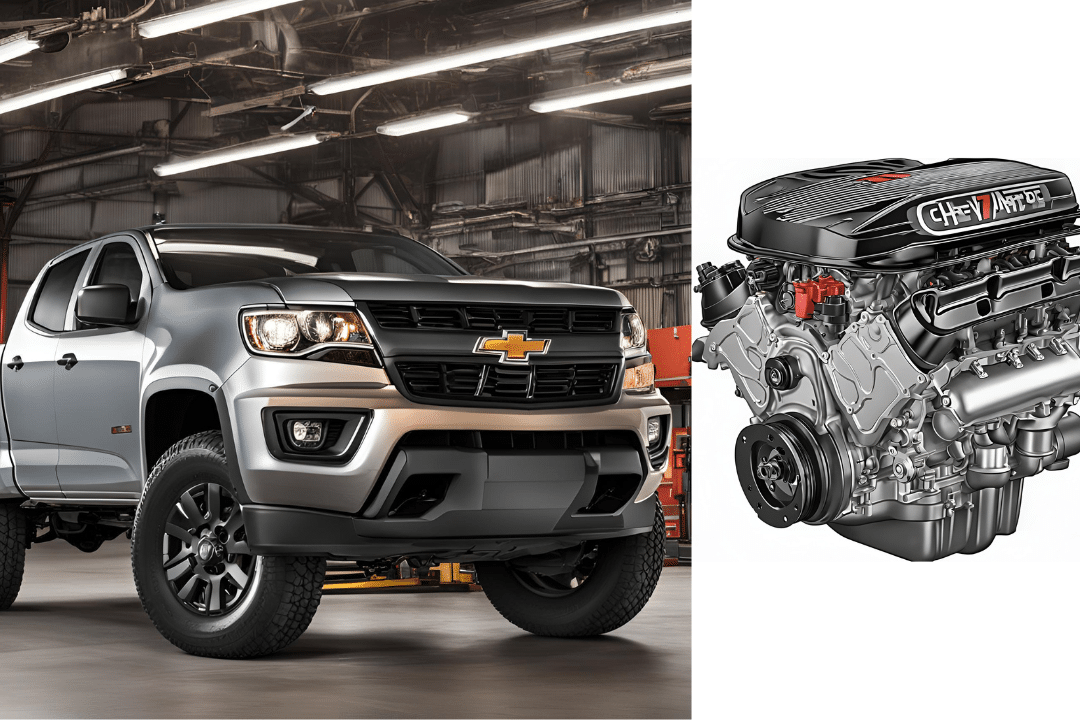
The firing order for the Chevy Colorado’s 5-cylinder engine is 1-2-3-4-5. This sequence is essential for maximizing engine performance, ensuring smooth operation and efficient combustion. A correct firing order minimizes vibrations and prevents potential engine damage caused by misfires.
Checking connections, spark plugs, and ignition wires is significant for maintaining this order. Any disruption can impact not only power delivery but also fuel economy and overall vehicle longevity. For further insights into ensuring your engine runs smoothly, including troubleshooting tips and maintenance practices, you’ll find more helpful information ahead.
Key Takeaways
- The firing order for the 5-cylinder engine in the Chevy Colorado is 1-2-4-5-3.
- Correct firing order is crucial for optimal engine performance and efficiency.
- An incorrect firing order can lead to misfires and engine damage.
- Always refer to the firing order diagram when connecting ignition wires.
- Troubleshoot firing order issues by inspecting spark plugs, ignition coils, and fuel injectors.
Understanding Firing Order Basics
What exactly is firing order, and why does it matter? Firing order refers to the sequence in which the engine’s cylinders ignite, a vital aspect of firing order fundamentals. In a Chevy Colorado, this order greatly impacts engine performance. Each cylinder needs to fire at the right moment to guarantee smooth operation and peak power delivery.
In a typical five-cylinder engine like the one in the Chevy Colorado, the firing order is usually 1-2-4-5-3. This specific sequence helps maintain balance in the engine’s operation, reducing vibrations and enhancing efficiency.
When the cylinders fire in the correct order, it maximizes the torque and horsepower generated, resulting in better acceleration and fuel efficiency.
If the firing order is incorrect, you’ll likely experience misfires, rough idling, and decreased power. These issues can lead to increased wear on engine components, ultimately shortening the engine’s lifespan.
Thus, understanding firing order fundamentals isn’t just about knowing numbers; it’s about making sure your engine runs smoothly and efficiently. By adhering to the correct firing order, you can enhance your Chevy Colorado’s performance and keep it running at its best.
Chevy Colorado Engine Specifications
| Specification | Details |
|---|---|
| Engine Type | 3.6L V6 or 2.5L I4 |
| Horsepower | 200 hp (I4) / 308 hp (V6) |
| Torque | 191 lb-ft (I4) / 275 lb-ft (V6) |
| Fuel Economy | Up to 20 city / 30 highway (I4), 18 city / 25 highway (V6) |
| Displacement | 2.5L (I4), 3.6L (V6) |
| Firing Order | 1-2-3-4-5 (5-cylinder engine) |
| Transmission | 6-speed automatic or manual |
| Fuel Type | Gasoline |
When it comes to the Chevy Colorado, understanding its engine specifications is essential for enhancing performance and maintenance. The Chevy Colorado offers various engine types, catering to different driving needs and preferences.
You’ll usually find a 2.5-liter I4 engine, a 3.6-liter V6 engine, and a 2.8-liter Duramax turbo-diesel engine in these models.
The 2.5-liter I4 engine provides a balance of power and fuel efficiency, generating around 200 horsepower and 191 lb-ft of torque.
If you need more towing capability and performance, the 3.6-liter V6 engine steps up, producing approximately 308 horsepower and 275 lb-ft of torque.
For those seeking ideal torque for heavy-duty tasks, the 2.8-liter Duramax turbo-diesel engine delivers 181 horsepower and an impressive 369 lb-ft of torque.
Each engine type in the Chevy Colorado is paired with either a six-speed automatic or a six-speed manual transmission, depending on your choice.
Understanding these specifications helps you make informed decisions about maintenance schedules, towing capacities, and overall vehicle performance, ensuring your Chevy Colorado runs at its best.
Importance of Correct Firing Order
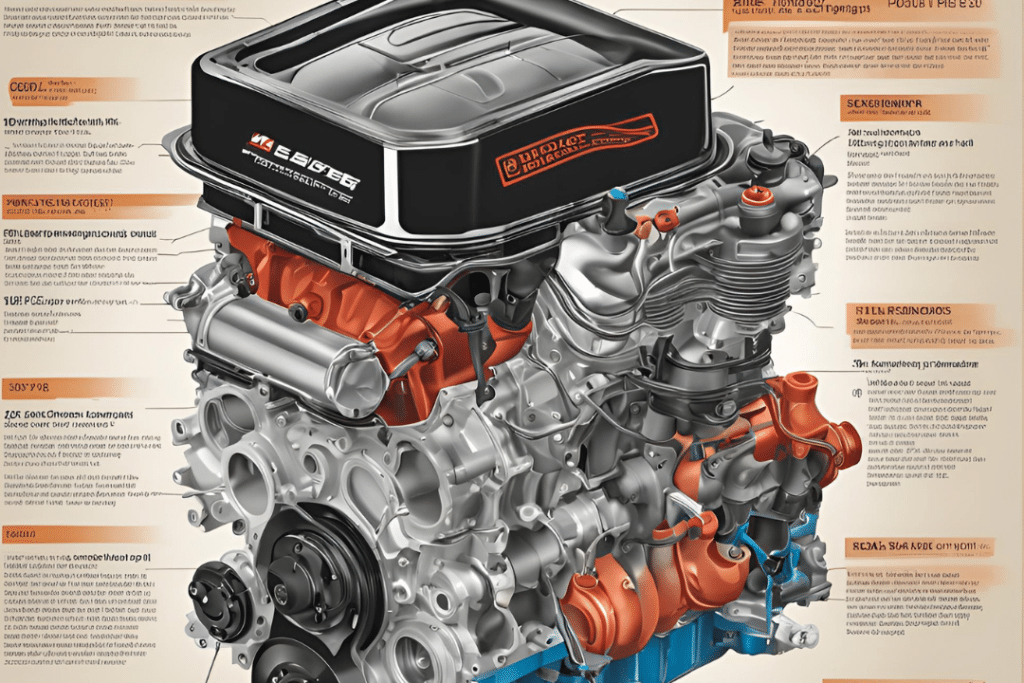
Getting the firing order right plays a significant role in your Chevy Colorado’s engine performance. The firing order determines the sequence in which each cylinder receives a spark, ensuring smooth operation and efficient combustion. If you’re off by even one cylinder, it can lead to misfires, reduced power output, and increased emissions.
Correct ignition timing is vital for optimizing engine performance. When the firing order is accurate, each cylinder ignites at the precise moment for maximum efficiency. This coordination directly impacts torque, horsepower, and fuel economy. An incorrect firing order disrupts this balance, causing vibrations and potential damage to engine components over time.
Additionally, maintaining the correct firing order helps prevent overheating, which can arise from uneven power distribution among cylinders. When you pay attention to the firing order, you not only enhance your vehicle’s longevity but also improve overall driving experience.
Troubleshooting Firing Order Issues
Identifying and troubleshooting firing order issues in your Chevy Colorado is vital for maintaining ideal engine performance. If you experience firing issues, it’s important to act quickly to prevent further damage.
Start by checking the spark plugs and ignition coils; a faulty spark plug can lead to a cylinder misfire, disrupting the firing sequence.
Next, inspect the ignition wires for any signs of wear or damage. Damaged wires can cause misfires and misdirected sparks, contributing to poor engine performance.
If everything looks good, consider examining the fuel injectors. A clogged injector can lead to inadequate fuel delivery, resulting in firing issues.
Using an OBD-II scanner can also help you identify specific cylinder misfires. Look for codes that indicate which cylinder is misfiring and focus your troubleshooting efforts there.
Finally, confirm that the timing belt or chain is properly aligned, as any misalignment can throw off the firing order.
Frequently Asked Questions
What Tools Do I Need to Check the Firing Order?
To check the firing order, you’ll need a spark plug socket, a ratchet, and possibly a torque wrench. Inspecting the ignition system requires a reliable multimeter for diagnosing any electrical issues affecting performance.
Can Wrong Firing Order Damage My Engine?
A wrong firing order can wreak havoc on your engine like a storm uprooting trees. It leads to poor engine performance and cylinder misfire, potentially causing severe damage if not corrected promptly. Always check your firing order.
How Often Should I Check the Firing Order?
You should check the firing order during regular maintenance intervals, especially when servicing your engine. Proper firing order guarantees peak engine performance, preventing potential issues that could lead to reduced efficiency or engine damage over time.
Are There Any Symptoms of a Firing Order Issue?
If you’re experiencing firing symptoms like rough idling, decreased power, or unusual exhaust sounds, it’s essential to perform a misfire diagnosis. Addressing these issues promptly can prevent further engine complications and maintain maximum performance.
Is the Firing Order the Same for All Chevy Colorado Models?
Isn’t it interesting how engine specifications vary? For the Chevy Colorado, firing orders can differ between models. Always check specific documentation or resources to verify you’ve got the correct firing order for your engine.
Final Thought
In conclusion, knowing the firing order of your Chevy Colorado’s 5-cylinder engine is essential for peak performance. Just like a well-orchestrated symphony, each cylinder must fire in harmony to guarantee smooth operation. If you encounter any issues, double-check the firing order against the diagram. By doing so, you’ll keep your engine running like a finely-tuned machine, preventing potential problems and assuring a reliable driving experience. Always remember, a little knowledge goes a long way in automotive care.
1 thought on “Chevy Colorado 5-Cylinder Engine Firing Order: 1-2-3-4-5 Explained”